Quick answer: the Ecobee Premium is the best smart thermostat overall. Spend less with the Amazon Smart Thermostat, the cheapest way in, or let the Nest Learning build your schedule for you.
Bottom Line
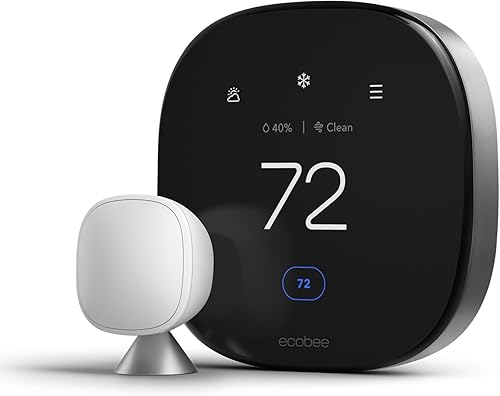
Ecobee Premium with Sensors
Ecobee Premium is the only thermostat that works with Apple HomeKit, Alexa, and Google Home at the same time. Multi-room sensors track occupancy across your whole house. Professional-grade scheduling and energy tracking. Worth the price if you own Apple devices or want maximum flexibility.
See Ecobee Premium →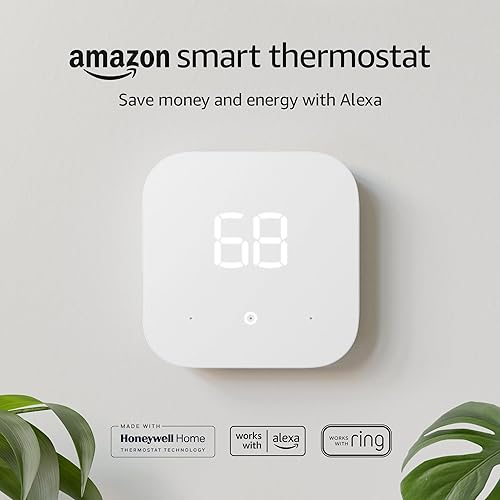
Amazon Smart Thermostat
This is the most affordable way to add remote control and basic scheduling to your HVAC system. Works with Alexa and standard thermostats. No learning features or room sensors, but installation is straightforward and works with nearly any system.
See Amazon Smart Thermostat →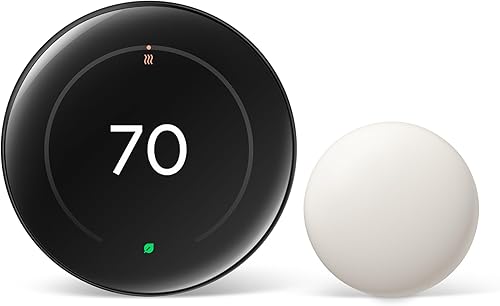
Google Nest Learning Thermostat
Nest learns your temperature preferences and schedule within 1-2 weeks with zero manual setup. Builds the schedule as you adjust it, then runs automatically. Works with Google Home, Alexa, and IFTTT. Delivers real energy savings without the multi-room sensor complexity.
See Nest Learning →Those are the three standouts across price, learning, and ecosystem compatibility. The rest of this guide breaks down the spec differences, owner experiences, and which thermostat solves which heating problem.
Thermostat Feature Comparison
Smart thermostats fall into three categories: budget controls, learning units, and multi-room systems. Here's how they compare on the things that actually matter.
| Feature | Ecobee Premium | Nest Learning | Amazon Smart | Honeywell X8S |
|---|---|---|---|---|
| Price | $$$ (w/ 1 sensor) | $$$ | $$ | $$$ |
| Learning Schedule | Manual + sensor assist | Auto-learns in 1 week | Manual only | Schedule + presence sensing |
| Room Sensors Included | 1 included | None | None | None on this listing |
| Max Room Sensors | 32 total | None supported | None supported | Optional sensors sold separately |
| Apple HomeKit | Yes | No | No | Yes (Matter certified) |
| Google Home | Yes | Yes | Yes | Yes |
| Alexa Support | Yes | Yes | Yes | Yes |
| Energy Usage Report | Detailed daily | Yes, with patterns | Basic weekly | Not listed on Honeywell's spec page |
| Geofencing | Via HomeKit/Alexa | Native | Via Alexa routines | On-device presence sensing |
| Professional Monitoring | Available | No | No | No |
| Link | View | View | View | View |
Price tiers are approximate. $ = under $50, $$ = $50 to 150, $$$ = $150 to 300, $$$$ = over $300. Tap any link for the current Amazon price.
The choice comes down to what you value: price (Amazon), automatic learning (Nest), ecosystem support (Ecobee), or multi-room comfort (Ecobee), or a thermostat that doubles as a doorbell screen and air-quality monitor (Honeywell). Very few homes need all of these features at once.
What Thermostat Owners Notice First
Verified reviews on Amazon tell a clear story: Nest users are happiest with setup and results, Ecobee owners value sensor flexibility but find installation trickier, and Amazon Smart users are thrilled by the price until they realize what they're missing.
Ecobee Smart Thermostat Premium: 4.3 stars from verified buyers
Ecobee owners consistently praise the occupancy sensors and HomeKit support. A March 2026 reviewer reported perfect integration with HomeKit and the Apple ecosystem and noted temperature swings disappeared once they added a second sensor. A January 2026 owner summed it up as a phenomenal thermostat for anyone who wants reliability and ecosystem flexibility. The complaint pattern is wiring-related: old homes with 2-wire setups or missing common wires hit a hard wall. Several reviews from February 2026 flagged that Ecobee's installation guide assumes wiring knowledge most homeowners don't have.
Google Nest Learning Thermostat: 4.4 stars from verified buyers
Nest owners rave about the learning feature. A February 2026 buyer reported it learned their schedule in less than a week and has not required any manual changes since. An April 2026 reviewer appreciated a 15-minute setup and a device that simply works after that. The learning algorithm is reliable enough that Nest sees the lowest complaint rate in the category. The criticism is narrow: owners who live in chaotic schedules where the temperature needs manual override daily describe Nest's predictions as well-intentioned guesses that keep missing. For anyone with a routine, Nest works.
Amazon Smart Thermostat: 4.3 stars from verified buyers
Amazon buyers love the price but resent the feature limitations. A December 2025 owner called it a great thermostat for the price but noted the lack of learning means you set schedules like a 2010 programmable thermostat. A March 2026 reviewer was blunt about expecting more for the money, while conceding it does control temperature remotely, which is the main thing. The geofencing limitations stand out in reviews: you can't set "come home, lower temperature to 72" in the Amazon app itself. You have to build a complex Alexa routine to get there.
Honeywell Home X8S Premium: 4.3 stars from verified buyers
The X8S is Honeywell Home's current flagship and replaces the T9 in this lineup. Its pitch is the 5-inch customizable color display: it is Matter certified and works with Alexa, Google Home and Apple Home, it senses occupancy on the device itself, and it can show and talk to a First Alert VX1 or Ring video doorbell (doorbells sold separately). Honeywell also lists humidity and ventilation control, with the caveat on its own product page that additional HVAC equipment may be required to use them. It is Energy Star certified and needs a C-wire. This listing ships without remote room sensors (Honeywell sells them as an optional add-on), so the multi-room balancing act the T9 was known for belongs to the Ecobee here.
Jacob’s read on this category
The wiring check on this page is the real buying guide; the feature table only matters once you pass it. Pull your old thermostat off the wall before ordering: an R and C wire means every model here works, a missing C wire means adding an adapter to the cart, and a heat pump's O/B wiring means confirming compatibility per model instead of assuming it. Plenty of returns start with a thermostat that was never going to power up on that wall. Settle the wiring first, and the 10 to 15 percent energy savings follow from whichever model matches your ecosystem.
Smart Home Ecosystem: Which Voice Assistant Wins
All five of these thermostats work with Alexa and Google Home. Only Ecobee works with Apple HomeKit.
If You Use Apple HomeKit
Ecobee Premium is your only choice among these five. The HomeKit integration runs natively. You add the thermostat to HomeKit, set automations in the Apple Home app, and control temperature with Siri. Temperature adjustments from HomeKit sync back to the Ecobee app instantly. This matters if you have HomeKit cameras, door locks, or lights already in place, since HomeKit automations can tie everything together in one place.
If You Use Google Home
Nest is the obvious pick since Google owns it, but Ecobee and Honeywell work just as well. Nest gives you native geofencing (leave home, trigger temperature adjustments automatically), deeper integration with Nest Hello doorbells and Nest cameras, and a unified Google Home app. Ecobee and Honeywell require you to build automations inside the Google Home app rather than the thermostat app.
If You Use Alexa
All five work equally well with Alexa. Amazon Smart Thermostat is the cheapest Alexa option. Nest, Ecobee, and Honeywell all integrate with Alexa routines, which means you can tie thermostat schedules to Echo Show displays, Echo speakers, and Ring cameras. Echo Show screens can display live thermostat status with a single voice command.
If You Use a Mixed Ecosystem
Ecobee wins by a mile. If your home has HomeKit devices, Alexa speakers, and Google Home displays all in the same house, Ecobee is the only thermostat that integrates with all three simultaneously without requiring separate apps or routines for each ecosystem.
Auto-Learning Thermostat Features
Winner: Nest, but Ecobee gets close with sensors.
Nest Learning Thermostat
Nest learns your temperature preferences by watching what you do. You set your thermostat to 70 three days in a row, and Nest notices the pattern. It observes when you adjust it up before you leave for work, down when you get home, then lower at bedtime. After 1-2 weeks, Nest has a schedule built from your actual behavior. You can override any day without breaking the learning. Nest adapts.
The genius is that Nest learns without you doing anything. No schedules to program. No apps to manage. The thermostat becomes predictive instead of reactive.
Ecobee with Room Sensors
Ecobee doesn't learn your schedule automatically; instead, it optimizes comfort based on where you are in your home. If you add sensors to the bedroom, living room, and kitchen, Ecobee tracks which rooms are occupied. It avoids cooling or heating empty bedrooms, focuses on the rooms with people in them. This approach saves energy differently than Nest: not by predicting when you'll want a change, but by not wasting conditioned air on empty rooms.
Amazon Smart Thermostat
No learning. You open the app, set a schedule (Monday 6am to 68, Monday 8am to 72, etc.), and the thermostat executes it. This works fine if your routine is stable, but any deviation requires manual override.
Installation: DIY vs Professional
All five thermostats are DIY-installable if your wiring supports them.
The Wiring Check
Before you buy, turn off your current thermostat and look at the wires. The most common setup is R (24V power), C (common), Y (cooling), G (fan), W (heating). If you have at least R and C, every thermostat here will work. If you have R but no C wire (uncommon in older homes), you'll need a C-wire adapter.
Heat pumps and dual-stage heating add O/B wires that tell the thermostat whether you're heating or cooling. All five thermostats handle these natively, but double-check the manual for your specific system.
Installation Difficulty
Easiest: Amazon Smart Thermostat and Honeywell T6 Pro are designed for novices. They include clear wiring diagrams, and the apps walk you through each step. If you can identify your wires, you can install either in 20 minutes.
Medium: Nest and Ecobee require a bit more wiring knowledge but include video guides. If you've ever changed a battery or replaced a light switch, you can handle these. Budget 45 minutes the first time.
Hardest: the Honeywell X8S, mostly because it requires a C-wire and its humidity and ventilation controls only do anything if your HVAC has the equipment to drive them. The thermostat itself mounts on Honeywell's standard UWP wall plate, so the physical swap is routine.
Professional Installation Available
Ecobee and some Nest models offer paid professional installation (typically $100-$200). If your wiring is unusual, your HVAC system is older, or you just don't want to risk it, paying for installation is reasonable peace of mind.
Real Energy Savings
Nest and Ecobee typically save 10-15% annually. Amazon Smart saves 5-8%.
Where Smart Thermostats Save You Money
The savings come from three sources: automatic scheduling (you don't cool the house while you're gone), predictive adjustments (Nest or sensor-based), and behavioral awareness (you see your usage and adjust habits).
Nest's learning thermostat usually delivers the biggest savings because it adapts your schedule to match actual occupancy and weather patterns. A home that manually programs a static schedule might cool from 8am to 6pm every day, but Nest will cool only when someone is actually home. Over a year, that adds up.
Ecobee's savings come from room-by-room optimization. Rather than cooling the whole house, you close vents in unused rooms or let Ecobee skip conditioning empty bedrooms. If you have rooms that stay empty (guest bedroom, office you don't use), this approach saves real money.
Amazon Smart Thermostat saves money if you were running a completely unscheduled thermostat before. If you already had a programmable thermostat on a decent schedule, the savings will be minimal.
The Real Payoff Period
A Nest in the $$$ tier paying 12% annual savings on a $1,200/year heating and cooling bill means $144 saved per year. The thermostat pays for itself in roughly 2 years. Ecobee, also in the $$$ tier, does the same with similar savings. Amazon's budget model in the $$ tier breaks even in around a year if you get any savings at all.
Which Thermostat Should You Buy?
Frequently Asked Questions
How We Compared the Thermostats
We reviewed current pricing for all five thermostat brands, cross-checked product specifications against manufacturer datasheets, and analyzed verified customer reviews on Amazon to identify the most consistent owner experiences. Features like learning, sensor compatibility, and ecosystem integration were verified against each brand's official documentation. Energy savings claims were based on published data from Energy Star and independent studies. Data was last verified in April 2026. Specs for the top pick come from ecobee's Smart Thermostat Premium page and for the Honeywell from Honeywell Home's X8S page; certification claims follow the ENERGY STAR smart thermostat program. Heat pump owners should read our heat pump thermostat guide before buying any of these, and Ecobee vs Nest Learning settles the top two head to head.
We do not take payment from Ecobee, Google, Amazon, or Honeywell. If you spot an error, please let us know.