Quick answer: buy by what the people in your house actually carry. If half the household is a kid with no phone, a contractor, or a dog walker in gloves, the Ultraloq U-Bolt Pro Wi-Fi hands out fingerprints and codes and stays out of the way. If everyone is already on an iPhone, the Schlage Encode Plus and Apple Home Key make the door open without anyone touching an app.
Bottom Line
The expensive way to get this choice wrong is to mount the lock, hand out access to the dog walker and the in-laws, and only then find out that the one person who needs reliable entry cannot work the thing. A teenager with no smartphone, a cleaner who will never install an app, a contractor who needs a Tuesday-only code: those people decide this comparison, not the marketing bullet list.
Ultraloq U-Bolt Pro Wi-Fi
Five ways in, a fingerprint reader that covers the people who will never carry a key or install an app, and a door sensor in the box so auto-lock knows whether the door is actually shut. It is also the cheaper of the two, which is unusual for the lock with more hardware in it.
See Ultraloq U-Bolt Pro →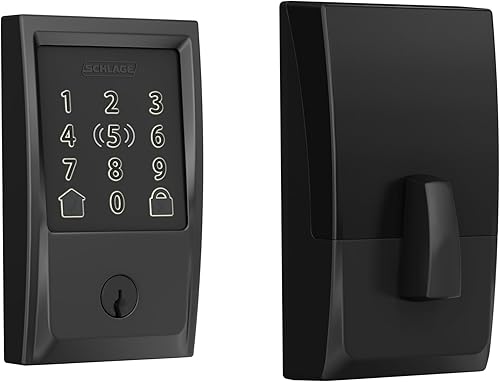
Schlage Encode Plus
The only one of the two that speaks Apple. HomeKit is native with no bridge, and adding the lock to Apple Wallet turns an iPhone or Apple Watch into a tap-to-open key that works even when your router is down. Schlage hardware carries the highest residential security grade.
See Schlage Encode Plus →Spec Sheet, Side by Side
Every cell below is a claim about the exact listing linked on this page, not about the brand's wider lineup. Both companies sell several locks with confusingly similar names, so the trim matters.
| Feature | Schlage Encode Plus | Ultraloq U-Bolt Pro Wi-Fi |
|---|---|---|
| Price tier | $$$ | $$$ |
| Ways to unlock | Touchscreen code, app, Apple Home Key, physical key | Fingerprint, keypad code, app, Bluetooth, physical key |
| Fingerprint reader | No | Yes |
| Apple HomeKit | Yes, native, no bridge needed | No |
| Apple Home Key (tap to unlock) | Yes, via Apple Wallet | No |
| Alexa / Google Assistant | Yes, native | Yes, plus SmartThings and IFTTT |
| Matter | No | Not listed by Ultraloq for this model |
| Wi-Fi | Built into the lock, no hub | Included in the box as a plug-in bridge |
| Door sensor for auto-lock | Not included | Included with this listing |
| Auto-unlock on arrival | No | Yes, geofenced |
| Keypad type | Capacitive touchscreen | Physical button keypad |
| Access codes | 100 | 50 |
| Security certification | ANSI/BHMA Grade 1 (AAA) | ANSI/BHMA A156.36 Grade 1 (per Ultraloq) |
| Weather rating | Check listing | IP65 (per Ultraloq) |
| Batteries | 4 AA, roughly 6 to 12 months | 8 AA; Ultraloq rates the Wi-Fi model at 3 to 6 months |
| Physical key backup | Yes | Yes |
| Installation | Screwdriver only, full deadbolt swap | Screwdriver only, full deadbolt swap |
Price tiers are approximate. $ = under $50, $$ = $50 to 150, $$$ = $150 to 300, $$$$ = over $300. Tap any link for the current Amazon price.
Getting In the Door: Finger, Code, or Phone
This is the whole comparison in one section. Ultraloq's answer is quantity: a fingerprint reader, a physical button keypad, the app, Bluetooth proximity, and a key cylinder. Schlage's answer is that your phone already is the key, so it drops the fingerprint reader entirely and leans on a touchscreen and Apple Home Key.
Quantity wins more households than it should on paper, because every household has at least one person outside your phone ecosystem. A fingerprint costs nothing to enroll and never expires, gets lost, or needs a software update. If that is the shape of your problem, the wider look at locks that read fingerprints covers the rest of the field, and our Ultraloq against the Kwikset SmartCode 270 matchup is the version of this question for people who do not want Wi-Fi in a lock at all.
Two things about those readers that spec sheets never mention. Cold, dry winter fingers read badly, and so do wet ones: the capacitive sensor wants a little skin moisture and not a film of water. Expect to enroll the same thumb two or three times at different angles, which is why Ultraloq lets you store several prints per person. And a touchscreen like the Encode Plus has the opposite seasonal problem: it will not register through a glove, so the person carrying groceries in January is taking a glove off either way.
The Apple Home Key Question
If your house runs on Apple, this stops being close. The Encode Plus pairs natively with Apple HomeKit with no bridge and no extra hardware, and it supports Apple Home Key, so the lock lives in Apple Wallet and an iPhone or Apple Watch held near the deadbolt opens it. Ultraloq lists Alexa, Google Assistant, SmartThings and IFTTT for the U-Bolt Pro, and HomeKit is not on that list, so there is no Siri and no tap-to-open.
Worth knowing before you assume Home Key is a gimmick: the tap is a local NFC handshake between the phone and the lock. It does not route through your router or Schlage's servers, so it keeps working during an internet outage, and it works on a phone whose battery has gone flat into reserve power. That is a genuinely different reliability story from any app-based unlock. If this is the deciding factor, our roundup of smart locks built for Apple Home lists the alternatives at other price points.
One correction people get wrong constantly: the Encode Plus does not support Matter. Schlage builds Wi-Fi straight into the lock instead, which is why it needs no hub but also why it is not going to show up in a Matter controller.
Batteries, Outages, and What Still Works
The Ultraloq eats twice the batteries, eight AA against four, and Ultraloq rates the Wi-Fi version at three to six months. Schlage's four-AA pack typically runs longer. That gap is not a design failure, it is the cost of keeping a fingerprint sensor, a geofence radio and a door sensor awake, and eight AA cells are a real line item if you buy them at a convenience store twice a year. Buy them by the box.
When the internet drops, both locks keep the parts that live inside the lock: keypad codes, the fingerprint reader on the Ultraloq, and the key cylinder on either. What stops is everything remote, which is the same list for both brands: push alerts, unlocking for a guest while you are at work, voice commands, and activity history. Neither brand lets you check whether you locked up from the office during an outage, so if that matters, the answer is a lock that auto-locks on a door sensor, not an app you trust.
Install Reality Check
Both are full deadbolt replacements: the old cylinder and bolt come out, the new one goes in, and a screwdriver is all the tooling either needs. That makes both of them awkward in a rental, since the landlord will see a different lock on the door. Keep the original deadbolt boxed for move-out, and read our notes on locks for rentals and short-term stays if the door is not yours to modify.
Measure two things first. Door thickness: standard doors are fine, but a thick or double-bore door is where returns come from. And backset, the distance from the door edge to the center of the bore, which is either 2-3/8 or 2-3/4 inches. Both locks ship adjustable latches that cover both, but confirm it before you pull the old lock out at six in the evening.
The Ultraloq's interior housing is the bulkier of the two because of that eight-cell battery bay. On a door with a tight storm door or a narrow jamb return, hold the box against the door and look at the clearance before you commit.
What Owners Run Into After a Few Months
The recurring Ultraloq theme is that the fingerprint reader is the feature people end up using for almost every entry, and the complaints cluster around enrollment rather than daily use: prints registered casually on day one read poorly in winter, and re-enrolling the same finger a second and third time fixes most of it. The other steady note is battery appetite, which matches the manufacturer's own three-to-six-month rating for the Wi-Fi model.
For the Encode Plus, owners consistently report that Home Key is the thing that changes their habits, to the point that the keypad becomes a guest-only feature. The durable gripes are the touchscreen in cold or gloved conditions, and the fact that the Wi-Fi radio is doing real work inside a metal door, so a weak signal at the front of the house shows up as slow remote response. A mesh node near the entry solves more Schlage complaints than anything in the app.
Both brands draw the same structural complaint about auto-lock: without a door sensor, a lock can only guess whether the door is closed, so it throws the bolt into an open doorway. The Ultraloq listing includes the sensor, which is the quiet reason its auto-lock behaves better out of the box.
Pick By Your Household
Everyone has an iPhone, and you want the door to open without thinking about it. Schlage Encode Plus. Home Key is the only feature in this comparison that genuinely removes a step from your day, and the Grade 1 hardware is not a marketing line.
Someone in the house has no phone, or will never install an app. Ultraloq U-Bolt Pro. A thumb and a four-digit code cover a kid, a cleaner, a contractor and a neighbor watching the cat, with no account setup for any of them.
You want auto-lock you can actually trust. Ultraloq, because the door sensor comes in the box.
You are on Android but want the longest battery life. This is the awkward case. The Encode Plus runs longer on fewer cells and works fine with Alexa and Google, but you are paying the Apple premium for features you will not use. Look at the wider smart lock roundup before settling.
Prices and availability reflect Amazon listings at time of writing. Confirm on the product page before purchase.
Frequently Asked Questions
How We Put This Comparison Together
Smart lock comparisons go wrong when a feature is credited to the brand rather than the exact trim on the door, so every row in the table above was checked against the manufacturer's own spec page for the specific model linked here, and ambiguous rows were left as a prompt to check the listing instead of being filled with a guess. Capability claims, HomeKit, Home Key, Matter, certification grade and battery counts, were confirmed per model on 2026-10-06. We do not state a lock lacks a feature unless the manufacturer's documentation shows it.
We take no payment from Schlage, Ultraloq, or any brand named here. If you spot an error, please let us know.