Quick answer: the Reolink Argus 4 Pro takes this one with a sharper 4K sensor, a wider single-frame view, and broader on-device detection; the eufy SoloCam S340 answers back with an included solar panel and 360° pan and tilt.
Bottom Line
Miss the difference between these two and you find out the hard way, at 2 a.m., squinting at a clip that's either too dim to identify a face or panned the wrong direction the moment something actually happened. eufy and Reolink both sell cameras that skip the monthly bill entirely, but they get there on very different hardware.
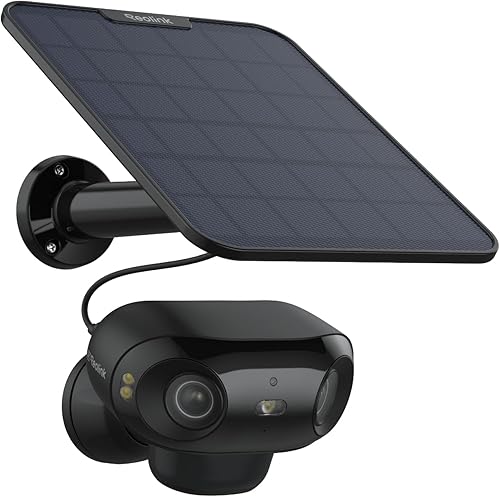
Reolink Argus 4 Pro
4K UHD resolution, a 180° panoramic frame from two stitched lenses, and on-device person, vehicle, and animal detection with no hub required. Records to microSD (up to 512GB) or an optional Reolink Home Hub, with zero ongoing fees.
See Reolink Argus 4 Pro →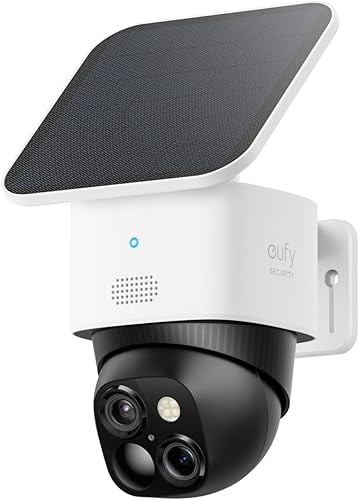
eufy SoloCam S340
A 3K wide lens plus a 2K telephoto lens, 360° motorized pan and tilt, and a solar panel included with the camera. Records to 8GB of built-in storage with no hub required, and person detection runs on-device at no cost.
See eufy SoloCam S340 →That's the short version. The full breakdown covers resolution, coverage design, detection categories, power, and storage capacity below.
Head-to-Head: eufy SoloCam S340 vs Reolink Argus 4 Pro
These are the two cameras most no-subscription shoppers end up cross-shopping. Here's how they compare on the specs that actually change the buying decision.
| Feature | eufy SoloCam S340 | Reolink Argus 4 Pro |
|---|---|---|
| Sensor resolution | 3K wide lens + 2K telephoto lens | 4K UHD, dual-lens panoramic |
| Field-of-view design | 360° motorized pan and tilt (sequential) | 180° stitched panoramic (single frame) |
| Night vision | Color, built-in spotlight | Color, spotlight + F/1.0 aperture lens |
| On-device AI detection | Person detection free; vehicle/pet/face needs optional HomeBase S380 | Person, vehicle, and animal, no extra hardware |
| Power | Solar panel included, plus battery | Battery; solar panel sold separately |
| Local storage | Built-in 8GB, no hub required | microSD up to 512GB, or optional Home Hub |
| Optional expansion hub | HomeBase S380 (adds recognition, more storage) | Reolink Home Hub (adds cross-camera tracking, more storage) |
| Voice assistants | Alexa, Google | Alexa, Google |
| Price tier | $$$ | $$$ |
Price tiers are approximate. $ = under $50, $$ = $50 to 150, $$$ = $150 to 300, $$$$ = over $300. Tap any link for the current Amazon price.
Reolink wins the spec sheet: higher resolution, a wider aperture for night shots, and more detection categories without buying anything extra. eufy wins on coverage flexibility: the same price tier, but with a motorized pan-and-tilt head that sweeps 360 degrees where the Reolink watches a fixed field of view.
Resolution and Coverage: Pan-Tilt vs Panoramic
These two solve "see everything" in opposite ways.
The eufy SoloCam S340 pairs a 3K wide-angle lens with a 2K telephoto lens on a motorized base that physically rotates to sweep a full 360 degrees. That means it can eventually point at anything around it, and the telephoto lens pulls in more zoomed detail than a fixed wide lens would. The trade-off is timing: if the camera is pointed at your driveway and someone walks past the side gate, it has to pan there before it records clear footage of that spot.
The Reolink Argus 4 Pro takes the opposite approach. Two lenses stitch together into a single 180-degree panoramic frame, captured all at once, at 4K UHD. Nothing in that arc is missed because the camera panned away. The trade-off is that anything behind the camera, outside the 180-degree arc, is simply never in frame, no matter how long you wait.
For a single camera watching one wide, open area, like a driveway or backyard, Reolink's single-frame panoramic is the safer bet because it never has to guess where to look. For a camera mounted somewhere with activity on multiple sides, like a corner of a house facing both a walkway and a side yard, eufy's pan-and-tilt can eventually cover more total ground with one unit.
On raw detail, the Reolink's 4K sensor and F/1.0 aperture night lens produce the cleaner still frame, especially after dark. See our full best security cameras roundup for how both stack up against 2K and 1080p models from Ring and Arlo.
Smart Detection: What You Get Without Paying
Edge: Reolink, for what ships in the box.
The eufy SoloCam S340 detects people on-device with no subscription and no hub. To add familiar-face recognition, vehicle detection, or pet detection, you need the optional HomeBase S380, which is a one-time hardware purchase rather than a monthly fee, but it is still extra hardware you have to buy separately.
The Reolink Argus 4 Pro processes person, vehicle, and animal detection directly on the camera, no hub or subscription required. If you want a camera that tells you "car in the driveway" versus "person at the door" versus "the neighbor's dog again" without adding anything to the cart, Reolink gets there out of the box.
Neither brand locks basic motion and person alerts behind a paywall, which puts both well ahead of Ring and Blink, where useful alerts require an active Ring Protect or Blink subscription plan. If a no-subscription camera is the whole point of your search, our guide to subscription-free security cameras covers more options at every price point.
Power, Storage, and the Privacy Question
Both cameras are built to run without a cable and without a bill, but they get there through different hardware choices.
The eufy SoloCam S340 ships with its solar panel in the box, so there is no separate accessory to buy before it can run indefinitely in a sunny spot. Storage is built into the camera itself at 8GB, which is enough for rolling event clips but will overwrite older footage sooner than a large microSD card would, especially given the larger file sizes from the dual-lens sensor. The optional HomeBase S380 adds expandable storage if 8GB starts feeling tight.
The Reolink Argus 4 Pro's solar panel is sold as a separate accessory, so budget for it if you want the camera to run without ever swapping a battery. In exchange, its microSD slot supports cards up to 512GB, which holds far more footage before anything gets overwritten, and an optional Reolink Home Hub adds cross-camera tracking for buyers who plan to add more units later.
On privacy, both can operate without a mandatory cloud account for local recording. Anker, eufy's parent company, did face a 2022 disclosure over some cameras sending cloud thumbnail data that contradicted its local-only marketing claims at the time, and it revised its practices afterward. If local-only operation is the reason you're choosing either brand, keep firmware current and check the app's cloud settings after setup, on either camera. Our eufy vs Ring comparison goes deeper on how eufy's local storage model compares to Ring's cloud-only approach.
Which Camera Should You Choose?
Match the camera to your mounting spot and your patience for accessories, not just the spec sheet.
Frequently Asked Questions
How We Ran This Head-to-Head
eufy and Reolink both market themselves on skipping the monthly fee, but the hardware underneath that promise is genuinely different. We cross-checked resolution, field-of-view design, detection categories, and storage specs against each brand's own product pages and spec sheets, then verified pricing and availability against the live Amazon listings on 2026-10-17. Specs were taken from Reolink's Argus 4 Pro page and eufy's SoloCam S340 page, and the IP ratings follow the IEC 60529 standard.
We do not take payment from eufy, Reolink, or any brand mentioned here. If you spot an error, please let us know.