Quick answer: the doorbell I'd install first is the Ring Battery Doorbell Pro; skip the monthly fee entirely with the Reolink Video Doorbell WiFi, the no-subscription choice.
Our Top Picks at a Glance
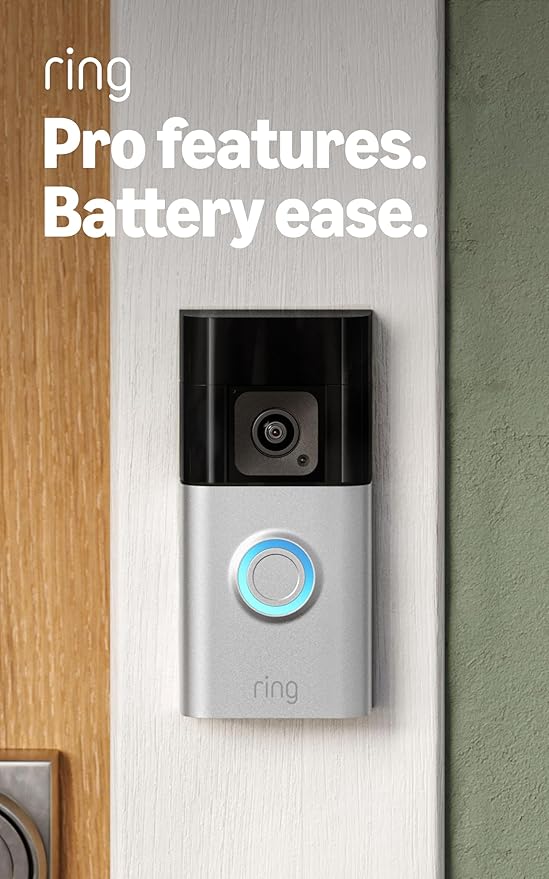
Ring Battery Doorbell Pro
The newest model records Retinal 4K wide-angle video with up to 10x Enhanced Zoom. The sharpest battery doorbell in this lineup.
See it on Amazon →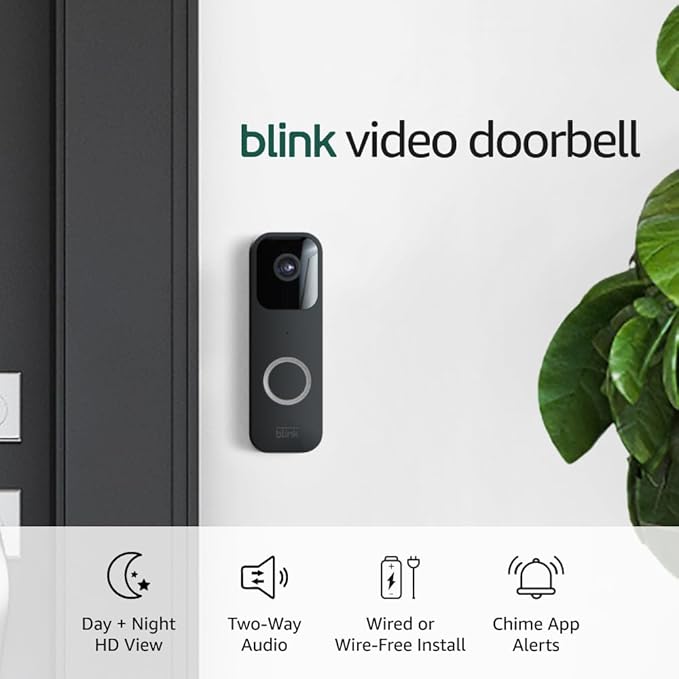
Blink Battery Doorbell 2K+
Head-to-toe 2K view, battery powered, simple setup, 4.3-star verified-buyer average. A Sync Module is required and sold separately. Hard to beat if you're already on Amazon's side of the fence.
See it on Amazon →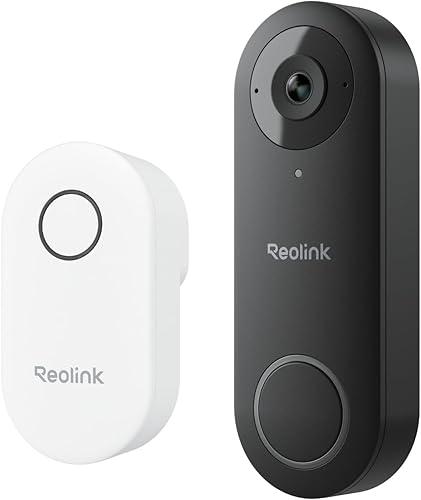
Reolink Video Doorbell WiFi
2K resolution with local microSD or NVR storage, person detection on-device, zero monthly fees. Everything works out of the box.
View on Amazon →A video doorbell is probably the most practical smart home upgrade you can make. You get to see who is at the door from anywhere, talk to delivery drivers without getting up, and keep a running record of porch activity day and night. The catch is that every brand now sells three or four models at different prices, and the trade-offs between them are not always obvious.
We pulled the seven most popular video doorbells of 2026 and compared them on the things that actually change your daily experience: video resolution and field of view, power source and install difficulty, smart detection, ecosystem compatibility, what you lose without a subscription, and the real cost over a couple of years. Whether you want the sharpest picture, the fastest install, or nothing monthly, the right pick is in here.
Full Comparison Table
Click any column header to sort. Green highlights indicate the best value in that category.
| Doorbell | Resolution | Power | Smart Features | Ecosystem | Price | Link |
|---|---|---|---|---|---|---|
| Ring Battery Doorbell Pro | 4K | Battery | Wide-angle view, up to 10x Enhanced Zoom | Alexa | $$$ | View |
| Ring Battery Doorbell Plus | 1080p HDR | Battery or wired | Head-to-toe view, pre-roll video, motion zones | Alexa | $$$ | View |
| Google Nest Doorbell (Battery) | 960p HDR | Battery or wired | Person/package/animal/vehicle detection | $$$ | View | |
| Blink Battery Doorbell 2K+ | 2K | Battery | Head-to-toe 2K view, Sync Module required (sold separately) | Alexa | $$ | View |
| eufy Dual Camera Doorbell | 2K | Wired | Dual cameras (front + down), local storage | Alexa, Google | $$ | View |
| Reolink Video Doorbell WiFi | 2K | Wired | Person detection, local storage, no sub | Alexa, Google | $$ | View |
| Ring Video Doorbell Wired | 1080p | Wired only | Motion zones, two-way audio | Alexa | $$ | Unavailable |
Price tiers are approximate. $ = under $50, $$ = $50 to 150, $$$ = $150 to 300, $$$$ = over $300. Tap any link for the current Amazon price.
What Doorbell Owners Keep Mentioning
Spec sheets tell you what a doorbell can do. Verified Amazon reviews tell you which promises hold up once the thing is mounted by the front door. Here's what actual buyers say about the five models most worth a closer look.
Ring Battery Doorbell Pro: 4.2 stars from verified buyers
The link below now points to the newest model, which moves the Pro from 1536p up to Retinal 4K with a wide-angle view and up to 10x Enhanced Zoom. Verified buyers currently average it at 4.2 stars. As with every battery doorbell in this lineup, how long a charge lasts will depend on porch traffic and how aggressively you tune motion settings.
Google Nest Doorbell (Battery): 4.2 stars from verified buyers
Owners consistently point to the vertical field of view and the on-device AI. Buyers describe a frame that catches packages on the ground and visitors head to toe, and five-star reviews credit the category detection with reliably telling animals, people, and package carriers apart. The recurring negative is the same one Ring owners mention: battery drain unless you tune the settings.
Reolink Video Doorbell WiFi: 4.2 stars from verified buyers
Local storage and zero subscription come up in almost every positive review, with buyers ranking it near the top of the category for local storage, minimal setup, and room to expand; one got it wired into a 1950s home in a few hours. Owners describe the included chime as plug-and-go with barely any latency. Negative reviews center on the initial app experience, which Reolink support has reportedly fixed in recent firmware.
eufy Video Doorbell E340 Dual Camera: 4.2 stars from verified buyers
The dual-camera setup is what wins over buyers coming from single-lens doorbells. Owners describe night footage that reads almost like daytime without blasting a spotlight, AI alerts that stay accurate instead of spamming false notifications, and the absence of any subscription as the biggest win. A handful of four-star reviewers mention battery drain even when hardwired, which is worth checking your transformer voltage for before install.
Ring Battery Doorbell Plus: 4.5 stars from verified buyers
The head-to-toe frame is the feature owners keep bringing up: buyers report seeing packages sitting right against the door instead of a clip of a torso coming and going. The most common four-star gripe echoes the Pro, that most functions sit behind a subscription, a trade-off reviewers say they wish they had researched before buying.
Jacob’s read on this category
Sort by power before you compare cameras, because power is set by your doorframe, not your preferences. Existing chime wiring points to a wired model that never needs charging and keeps the indoor chime ringing; no wiring means a battery pick and a standing date with a USB cable. The second filter is the subscription table, since two doorbells with identical video can carry very different third-year costs once clip storage fees enter the math, which is exactly why the no-fee Reolink keeps its spot here. Settle power, then storage, and the field usually narrows itself to two candidates.
Battery vs Wired Doorbells
The first decision is how your doorbell gets power. This drives install difficulty, ongoing maintenance, and which features you'll actually get to use.
Battery-powered doorbells (Ring Battery Doorbell Pro, Ring Battery Doorbell Plus, Google Nest Doorbell, Blink Doorbell) are the easiest to install. Mount the bracket with two screws, snap the doorbell on, connect to WiFi through the app. Under 15 minutes, no electrical knowledge. The trade-off is battery life. Most battery doorbells last 1 to 6 months between charges depending on traffic and settings. High-traffic porches, frequent live viewing, and cold weather all drain the battery faster. Most battery models can also be hardwired to existing doorbell wiring for continuous power, which basically gives you both.
Wired doorbells (eufy Dual Camera, Reolink, Ring Wired) run off your existing doorbell transformer, typically 16-24V AC. Installation is straightforward if you already have wiring: pull the old doorbell, connect two wires, mount the new one. If your home has no doorbell wiring at all, you'll need an electrician to install a transformer. The upside is that wired doorbells never need charging, support always-on recording, and tend to ship with richer feature sets because they aren't constantly fighting to conserve battery.
Renting, or want the simplest install? Go battery. Already have doorbell wiring and want the most hands-off experience possible? Go wired.
Video Quality and Field of View
Resolution numbers on a spec sheet don't tell the full story for doorbells. Unlike security cameras that watch a wide area at a distance, a doorbell captures a visitor standing three feet away. That means field of view and aspect ratio matter as much as raw pixel count.
The Ring Battery Doorbell Pro (newest model) stands out with Retinal 4K resolution, a wide-angle view, and up to 10x Enhanced Zoom. It is the sharpest picture in this lineup. The Ring Battery Doorbell Plus and the Blink Battery Doorbell 2K+ both frame a head-to-toe view instead, which lets you see a person's face and any packages on the ground in a single shot. Standard landscape-oriented doorbells cut off the bottom of the frame, so packages and small kids disappear unless you tilt the camera down. And if you tilt it down, you lose the visitor's face. Not ideal.
The eufy Dual Camera Doorbell solves this a different way: two separate cameras. A main lens at face height, plus a second downward lens aimed at the ground below. The dual-view setup gives you the most complete porch coverage of any doorbell we've looked at, and it kills the blind spot that single-camera designs struggle with.
The Reolink Video Doorbell WiFi ships 2K at a budget price, which is exceptional for the picture quality it delivers. At the budget end, the Blink Battery Doorbell 2K+ records 2K in its head-to-toe frame and the Ring Video Doorbell Wired records at 1080p. Good enough for identifying a visitor at the door. You'll notice the difference if you zoom in, though, and honestly, 2K is the new baseline most buyers should shoot for.
HDR deserves its own callout. The Google Nest Doorbell uses HDR processing to handle high-contrast scenes, which show up constantly at front doors (bright sky behind a shadowed porch). Without HDR, visitors show up as silhouettes when the sun is behind them. The Nest handles that better than most competitors, even though its base resolution (960p) is lower on paper.
Smart Features Comparison
Modern video doorbells do a lot more than ping you when something moves. The smart detection built into each model is what determines whether your notifications are useful or a constant source of phone-rage.
Package detection is one of the most practical features for a front door. The Google Nest Doorbell leads here with on-device AI that separates people, packages, animals, and vehicles. Because the processing happens on the doorbell itself, those alerts work even on the free tier. No Nest Aware subscription required. Ring doorbells also do package detection, but you need a Ring Protect plan ($4.99/month or $12.99/month for Ring Protect Plus) to turn it on.
Pre-roll video is a Ring-exclusive trick on the Ring Battery Doorbell Plus. When motion is detected, the doorbell pulls a few seconds of low-res footage from before the trigger. That matters because battery doorbells sit in a low-power sleep state and take a beat to wake up. Without pre-roll you miss those first few seconds. By the time the camera is actually recording, the person has already reached the door. Pre-roll fills in the gap. It's a genuinely clever workaround for the latency baked into battery power.
Enhanced Zoom is the headline feature on the newest Ring Battery Doorbell Pro: up to 10x zoom backed by a Retinal 4K image. Because the base picture carries 4K detail, zoomed footage stays legible where the 1080p doorbells in this lineup turn fine detail into blocks.
The eufy Dual Camera Doorbell puts its two cameras to work in a split-screen or picture-in-picture view, so you see the visitor's face and whatever is sitting on your doorstep at the same time. All the AI runs locally on the device. No cloud dependency, no subscription for smart alerts.
Two-way audio is standard across all seven doorbells in the lineup. Quality varies, but they're all clear enough for a conversation with a delivery driver. The Ring and Google models tend to have the lowest audio latency, which makes back-and-forth feel more natural.
Subscription Requirements
Subscriptions are the hidden cost of video doorbells, and the gap between brands is bigger than most buyers realize. Here is exactly what you get (and what you lose) without a paid plan.
Ring (Battery Doorbell Pro, Battery Doorbell Plus, Video Doorbell Wired): without a Ring Protect subscription, you get live view, two-way talk, and real-time motion notifications. You cannot save, review, or share any video clips. Miss a live alert when someone grabs a package, and the footage is gone. Ring Solo is $4.99/month per device and adds 180-day video history, photo capture, and person alerts. Ring Protect Plus at $12.99/month covers unlimited devices and throws in 24/7 professional monitoring.
Blink (Battery Doorbell 2K+): works the same way Ring does. Without a Blink Subscription Plan ($3/month per device or $10/month for unlimited), you get live feed and motion alerts, but no cloud-saved clips. You can record locally to a Blink Sync Module 2 with a USB drive attached, which is a partial workaround if you hate subscriptions.
Google Nest (Doorbell Battery): the most generous free tier out there. Without Nest Aware, you get a rolling 3-hour event history with intelligent alerts that tell people, packages, animals, and vehicles apart. That 3-hour window is enough for a lot of households. Nest Aware at $8/month extends history to 30 days. Nest Aware Plus at $15/month bumps it to 60 days of events plus 10 days of 24/7 continuous recording.
eufy (Dual Camera Doorbell): no subscription needed. Everything works out of the box. Video is stored on 16GB of built-in local storage (roughly 60 days of event clips). Smart detection runs on the device itself. This is the best no-sub option if you want advanced features.
Reolink (Video Doorbell WiFi): no subscription needed. Video is stored on a microSD card (up to 256GB) or an NVR if you already own one. Person detection runs locally. Reolink doesn't even offer a cloud subscription. Everything is local by design. With its low upfront price and zero ongoing costs, the Reolink has the lowest total cost of ownership in the whole lineup.
Which Video Doorbell Should You Get?
The right doorbell depends on your priorities, the smart home you already own, and whether you're willing to pay monthly. Here are our picks by use case.
If your home already runs on Alexa, the Ring Battery Doorbell Pro is the strongest pick. It streams to Echo Show displays, supports Alexa routines, and has the best video quality of any Ring doorbell. Budget-focused? The Blink or Ring Wired both handle the core job well at the low end of the lineup.
In the Google ecosystem, the Nest Doorbell (Battery) is the natural fit. Its free 3-hour event history is the best no-cost cloud tier on the market.
If you refuse to pay subscriptions, the Reolink and the eufy are your two real options. Both store everything locally, both include smart detection. The eufy's dual-camera design is unusual and surprisingly useful in daily life. The Reolink is the better pure value play.
How We Narrowed the Doorbell Field
Doorbell comparisons have to account for three tradeoffs at once: video quality, power source, and what you lose without a subscription. We verified each doorbell's resolution and field-of-view claims against owner-uploaded screenshots in verified reviews, re-checked Amazon stock against the live listings on 2026-10-17, and pulled subscription pricing directly from each brand's support page. We then cross-referenced the verified-review body text above against the published specs to make sure the promises on the box actually show up at the front door. Resolution and battery figures for the top pick come from Ring's Battery Doorbell Pro page, and the plan prices from Ring's plans page. Readers deciding between Ring's own two battery models should read Ring Battery Doorbell Pro vs Plus, and Nest vs Ring covers the Google alternative.
We do not accept payment from any manufacturer. Our rankings come from product specs and aggregate owner feedback, not sponsored placement. If you spot an error, please let us know.